Power Distribution Transformer Solutions
Engineering SupportGlobal Project Supply

High Voltage Power Transformers Guide: How to Select?
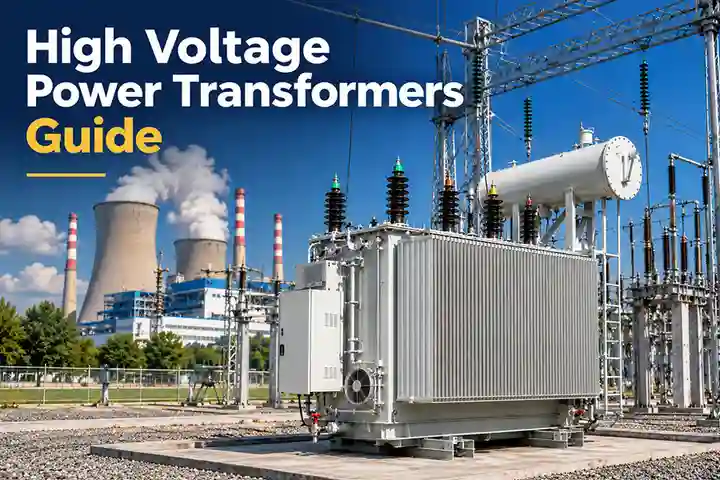
A high voltage power transformer moves bulk electricity between high-voltage power grid. It steps voltage up or down while keeping the system frequency stable. It serves electrical power transmission, substations, generation sites and large industrial power systems.
This high-voltage transformer guide does not cover voltage transformers (VT/PT), test transformers, flyback transformers, or electronic high-voltage modules. It focuses on large power transformers used in real grid and industrial projects. You will learn how to define transformer types, calculate MVA, set voltage ratios, choose impedance and BIL, select cooling and OLTC, evaluate losses, verify suppliers.
A substation can have a clear voltage target and still have an incomplete transformer specification. A 110 kV connection, for example, does not tell a supplier the peak load, fault level, insulation duty, cooling need or delivery limits. Those gaps can change the design and the price after bids arrive.
Key takeaways:
- transformer selection starts with system voltage, load profile, fault level, and reliability targets — not with a catalog.
- MVA, impedance, BIL, cooling, and losses interact. You cannot optimize one without affecting the others.
- A complete RFQ makes quotations comparable and prevents change orders.
- Purchase price is only part of the cost. Losses, maintenance, and downtime drive the real total cost.
- Power transformer supplier verification requires proof of experience at your voltage and MVA class — not just a certificate.
What is a High Voltage Power Transformer?
A high-voltage power transformers is a large power-system transformer. It transfers usable AC power between parts of a large electrical system while changing the voltage level. These high-voltage transformers designed to transfer electrical energy between high-voltage networks by stepping voltage up or down while maintaining the system frequency.
Its rated MVA, winding arrangement, insulation and cooling are set by the job it must do. These units sit at the heart of power transmission and distribution. They connect power generation plants, power transmission networks, and industrial loads. More than 90% of consumed power passes through high-voltage transformers at some point. That fact alone shows how much depends on getting the selection right.
Direct Definition: HV Power Transformer and High-Voltage Transformer
HV is short for high voltage. The device changes system voltage between levels. It handles bulk power transfer — not just measurement signals for meters or relays. Primary and secondary windings link through a magnetic core. These transformers serve power generation, transmission substations, and large industrial loads.
What Voltage Is Considered High Voltage?
High voltage classifications change by standard and region. IEC, IEEE, and national grid codes each set their own boundaries. A 110 kV or 220 kV project must be specified under its own grid rules and chosen IEC, IEEE or local requirements. The RFQ should state both the nominal system voltage and the highest voltage for equipment. It should also state the required voltage ratio and insulation levels. A label such as “220 kV transformer” cannot replace those details. IEC 60076-1 sets general requirements for power transformers; IEC 60076-3 addresses insulation levels and dielectric tests.
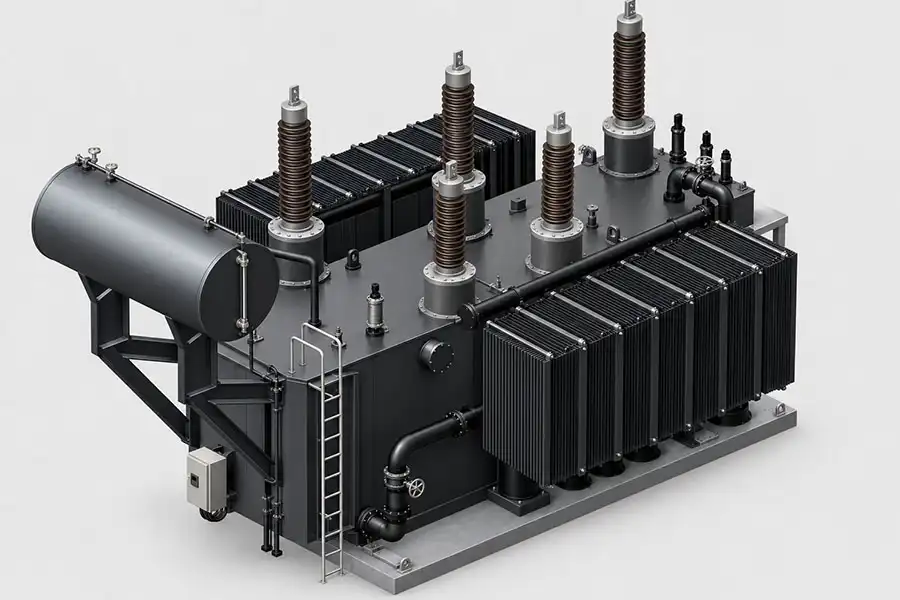
High Voltage Power Transformer vs Voltage Transformer (VT/PT)
A high voltage power transformer transfers usable electrical power between voltage levels. A voltage transformer, also called a VT or PT, is an instrument transformer. It reduces voltage for metering, protection, and control. These are two different devices with two different jobs.
| Equipment | Main job | Key rating questions |
|---|---|---|
| High voltage power transformer | Transfer bulk electrical power | kV, MVA, impedance, losses, cooling |
| Voltage transformer / VT / PT | Supply a voltage signal for measurement and protection | Ratio, accuracy class, burden |
| Current transformer / CT | Supply a current signal for measurement and protection | Ratio, accuracy class, fault duty |
| Circuit breaker | Interrupt a circuit when required | Voltage, current, interrupting duty |
These devices work together in a substation, but they are not the same product. Nor does every high voltage winding belong to a transmission-class unit: a smaller distribution transformer also has a winding on its higher-voltage side.
A VT typically reduces supply voltage to a safe value — commonly 120 V — for instruments and relays. It carries negligible load. A power transformer carries the full system load. Mixing them up leads to wrong specifications and wasted money.
How Do High Voltage Transformers Differ From Regular Distribution Transformers?
Both use electromagnetic induction, but their system roles and design demands are often different.
High voltage transformers use the same electromagnetic principle as other transformers, but differ substantially in voltage class, MVA rating, insulation coordination, cooling, bushings, monitoring, testing, and installation requirements. The term “regular transformer” is not a formal engineering classification. When someone says “regular transformer,” they usually mean a distribution transformer or a general-purpose industrial unit.
What Does “Regular Transformer” Usually Mean?
“Regular transformer” often refers to a distribution transformer, a general-purpose industrial transformer, or a low voltage transformer. None of these are official standard terms. They are casual labels. The real difference lies in voltage class, rated capacity, and application.
High Voltage Power Transformer vs Distribution Transformer
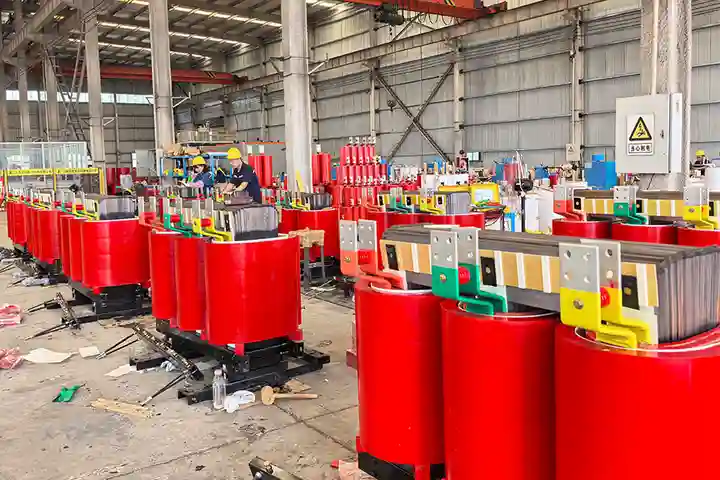
These are typical differences, not fixed MVA boundaries. A factory supplied from a medium voltage feeder may need a distribution unit, not a transmission-class main unit. An indoor room with strict fire rules may call for a dry-type design. A pad-mounted unit suits some underground distribution networks. The Huasheng oil-filled transformer range and dry-type transformers range are separate starting points for those duties.
| Factor | HV Power Transformer | Distribution Transformer |
|---|---|---|
| Voltage class | 110kV and above | Up to 35kV typically |
| Rated capacity | 10 MVA to 1,000+ MVA | 25 kVA to 5,000 kVA |
| Function | Transmission and interconnection | End-user power distribution |
| Insulation | Full insulation coordination | Simpler insulation |
| Cooling | ONAN, ONAF, OFAF, ODAF | ONAN or dry-type |
| Bushings | HV bushings with high creepage | Standard bushings |
| Monitoring | DGA, bushing monitoring, OLTC | Basic temperature and gas relay |
| Testing | Full FAT with dielectric and loss tests | Routine tests only |
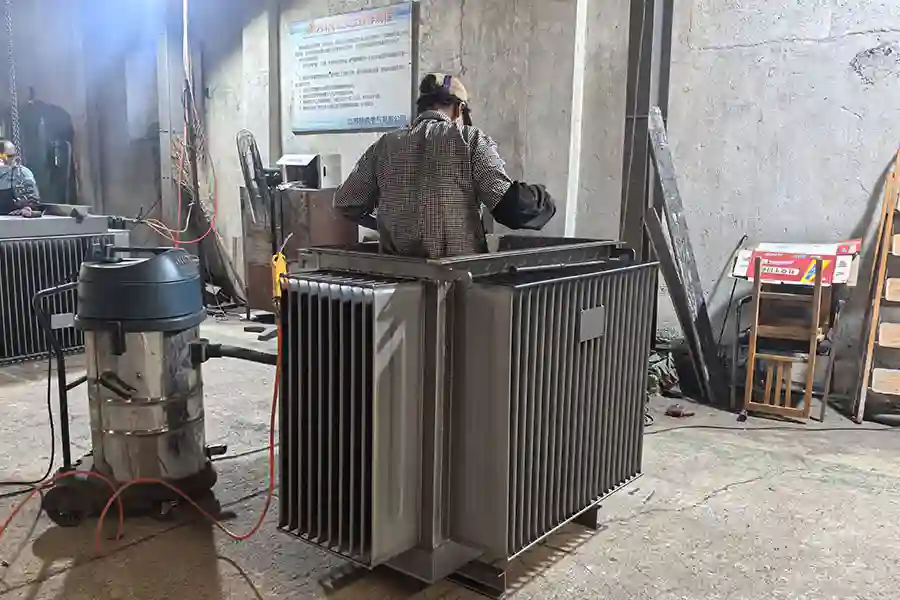
| Installation | Site assembly and oil processing | Factory-filled, ready to install |
| Procurement | 3-4 months lead time | 5-10 Weeks (Huasheng Huasheng Experiences) |
Notes: Voltage class, MVA range, testing scope and lead time vary by utility requirements, project standards, design complexity and supply scope.
When Is a Distribution Transformer the Better Choice?
A distribution transformer fits low-voltage or medium-voltage end-user distribution, small loads, commercial buildings, and standard distribution networks. If your project delivers power to a building or a small industrial site, a distribution transformer is likely the right fit.
Hoes a High Voltage Power Transformer Work?
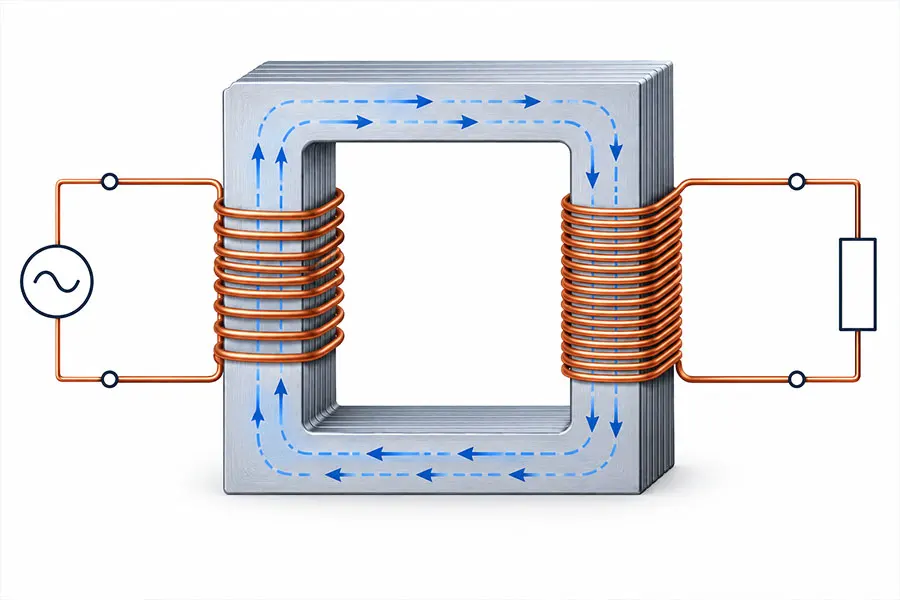
A high voltage transformer transfers electrical energy through electromagnetic induction between windings linked by a magnetic core. AC in one winding creates changing magnetic flux in a core, which induces voltage in another winding. The voltage conversion is through winding turns. In a simplified case, more secondary turns mean a higher secondary voltage; fewer turns mean a lower output voltage. The system frequency stays the same.
Electromagnetic Induction and Turns Ratio
AC current in the primary winding creates a changing magnetic flux in the core. That flux induces voltage in the secondary winding. Real units also have winding resistance, leakage impedance and core loss. They use power to run, so output power is lower than input power. Raising the voltage for a given transfer reduces current and, in turn, the resistive loss in a line.
That is why power plants use step-up transformers and substations use step-down transformers to connect networks at lower voltage levels. The U.S. Department of Energy explains this step-up and step-down path in its electricity production and distribution guide.
Step-Up vs Step-Down Operation
| System Path | Transformer Type | Example |
|---|---|---|
| 20kV → 220kV | Generator step-up | Power plant to grid |
| 220kV → 110kV | Transmission interconnection | Grid to regional network |
| 110kV → 33kV | Substation step-down | Regional to local distribution |
Step-up transformers raise voltage for transmission. Step-down reduce transformers lower voltage for distribution and end use. Both are high voltage power transformers.
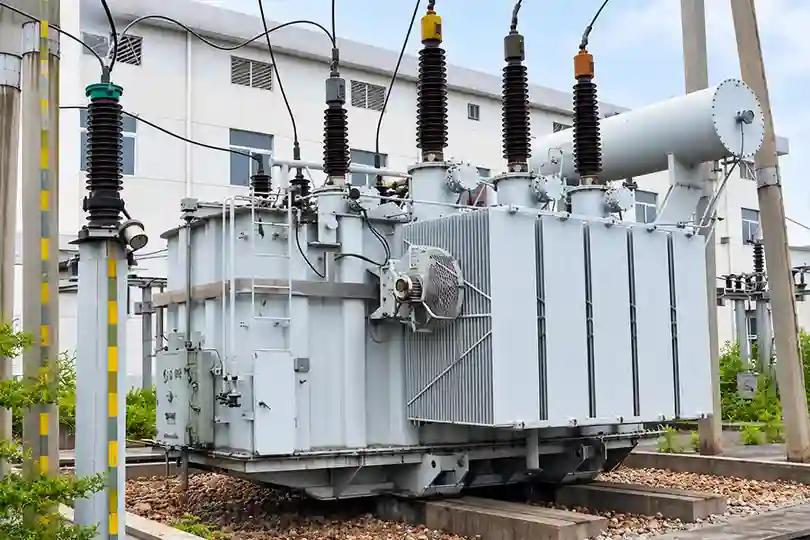
A typical oil-immersed unit contains a steel core, windings, solid and liquid insulation, a tank, bushings and heat-rejection equipment. Some designs also have a conservator, an on-load tap changer (OLTC), a gas relay and temperature devices. Their presence depends on the design. The transformer does not replace the substation’s breakers, surge arresters, grounding system or protection scheme.
Which Type of Transformer Fits the Application?
Choose the unit by its system task first, then settle its construction and cooling. Types cannot be sorted by one dimension alone. Construction, function, and cooling method each create a different classification. The same transformer can be core-type, generator step-up, and ONAF-cooled all at once.
| Application | Likely task | Early design question |
|---|---|---|
| Generation site | Step up voltage for export | What is the generator and grid connection duty? |
| Transmission substation | Connect or lower network voltage | What are the fault level and outage limits? |
| Solar or wind substation | Connect the collector system to the grid | How does output vary, and what does the grid code require? |
| Large industrial site | Power supply major process loads | Are there harmonics, repeated starts or shock loads? |
| Critical facility connection | Supply a planned incoming network | What unit arrangement meets the reliability study? |
Core-type and shell-type describe magnetic and winding construction. An auto transformer shares part of its winding between circuits; it is not an automatic substitute for a two-winding unit. Converter transformers serve power-electronic systems and need their own study.
Types by Cooling Method
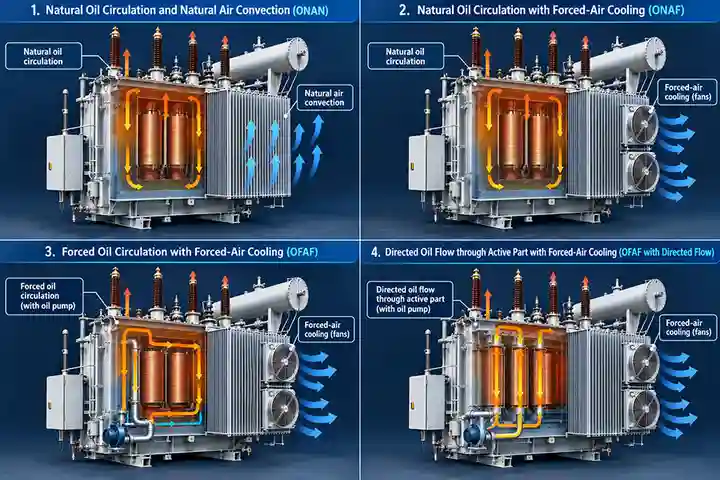
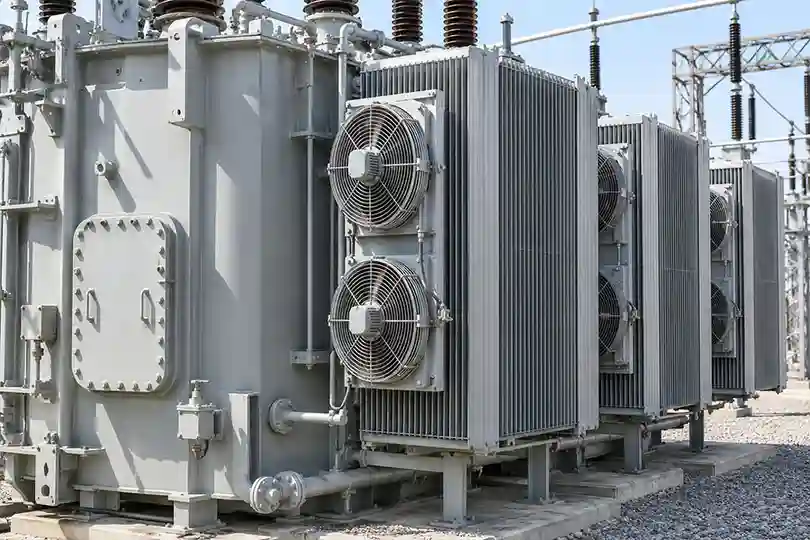
Cooling is another choice. ONAN uses natural oil and air movement. ONAF adds forced air. OFAF and ODAF use forced oil flow with forced air, with a difference in how transformer oil moves through the active part. A cooling stage affects rated output, auxiliary power, controls and maintenance. No single MVA value dictates one cooling method.
Oil-immersed transformers are common in outdoor substations. Dry-type transformers can suit some indoor or medium voltage duties, but they are not a default replacement for a 110 kV or 220 kV oil-immersed main unit. Do not use a VT/PT, a test unit or a low voltage power unit to solve a bulk-power duty.
How Choose a High Voltage Electrical Transformers unit for Your Electrical System?
Choose a high voltage power transformer by matching rated MVA, voltage ratio, frequency, vector group, impedance, insulation level, cooling, tap-changing capability, guaranteed losses, and environmental ratings to the system load profile, fault level, voltage-regulation requirements, reliability target, and applicable standards.
| System input | Decision it helps set |
|---|---|
| Continuous load and peaks | Rated MVA and cooling stages |
| Present and planned voltages | Winding ratios and tap range |
| Fault study | Impedance and short-circuit strength |
| Surge and insulation study | Insulation level and bushing duty |
| Voltage variation | Need for an OLTC |
| Ambient and altitude | Cooling margin and external insulation |
| Outage limit | Number of units and spare strategy |
What electrical duty must the unit meet?
Begin with the single-line diagram, not a catalogue model. Record where power enters and leaves, normal and emergency flows, grounding, upstream fault level and downstream load. Note whether the unit will step voltage up or down, and whether power may reverse. State the frequency, phases and target standard.
For an initial review, Huasheng Transformer can use the voltage ratio, required MVA, load profile and site conditions to identify missing specification items. That is a starting point, not a final design approval.
How much MVA do you need?
Divide expected MW by power factor for an initial MVA estimate, then test it against the operating case. At 42 MW and a power factor of 0.95, the estimate is about 44.2 MVA. It does not yet cover overload duty, auxiliary demand, a hotter site, future growth or a required reserve unit.
Consider a hypothetical 132/33 kV solar substation. One 50 MVA unit may cover the stated peak under the assumed conditions. Two 25 MVA units provide 50 MVA together, but one remaining 25 MVA unit cannot carry a 44.2 MVA peak if the other is out. A true N-1 plan needs a fresh load and outage study. Compare land use, switchgear, part-load losses, repair time and the cost of lost output before choosing one unit or two.
See Huasheng Wind Energy & Solar Power Transformer Solutions
Which voltage ratio and vector group should the RFQ state?
State each winding’s rated voltage, the highest system voltage, frequency and required phase relationship. The vector group affects phase displacement, neutral access and parallel operation. It is not a label to fill in after purchase. Include the grounding plan and the single-line diagram.
Huasheng’s internal 110 kV selection sheet, for example, lists two-winding 110/10.5 kV or 110/6.3 kV arrangements and three-winding 110/35/10.5 kV arrangements. Its 220 kV sheet lists typical 230/121/10.5 kV or 230/121/38.5 kV combinations. These are selection examples, not a promise that every listed combination fits a new project. The approved drawing and technical agreement control the order.
How do impedance and insulation affect the design?
Impedance limits fault current but also affects voltage drop; neither the lowest nor highest value is always best. Set it from the fault, load-flow, motor-starting and parallel-operation studies. Short-circuit withstand is a separate question: the windings and supports must survive the specified thermal and mechanical stress. IEC 60076-5 addresses that ability.
Set lightning impulse, power-frequency withstand and any switching impulse requirements from the insulation study and governing standard. In IEEE-based bids, a buyer may use the term BIL; in IEC-based bids, state the required insulation test levels. Check bushings and external air clearances as well as the internal insulation. Extra margin may add cost and size, so ask the design team to explain it.
How should cooling, taps and losses be set?
Set these items together because they affect rating, cost and service needs. Ask for the MVA available at each cooling stage, the site ambient used for that rating and the auxiliary equipment it needs. Specify an OLTC when the voltage study calls for adjustment under load. An off-circuit tap changer cannot perform that job while energized.
Ask bidders to state guaranteed no-load loss, load loss and any cooling-auxiliary use on the same basis. A higher-efficiency offer is useful only when its test method, reference conditions and price are clear. Load history also matters: core loss remains while the unit is energized, while load-related loss rises with current. IEC 60076-7 explains how load and ambient conditions affect a mineral-oil-immersed unit’s thermal ageing.
What changes at a hot or high-altitude site?
Give the supplier measured site conditions so external insulation and cooling can be checked. Altitude can change the air-insulation design. Heat can reduce cooling margin. Salt, dust, moisture and seismic duty bring other design checks, from bushing creepage and coating to supports and maintenance access.
For a hypothetical 110 kV site at 2,200 m and a 45°C maximum ambient, do not apply a stock “altitude correction” to every item. Submit those conditions and ask for the air-clearance, bushing, temperature-rise and loading calculations required by the chosen standard. The allowable rating must come from the actual design.
Which monitoring package is worth paying for?
Choose monitoring by the consequence of a failure, not by the longest accessory list. Oil and winding high temperature, oil level, gas detection, pressure relief and cooling controls may form the base package for an applicable design. Online dissolved-gas analysis (DGA), bushing monitoring and remote data links may suit a unit whose outage would be costly or slow to recover from.
This follows a useful point in OMICRON’s power-transformer testing video: tests help owners assess condition, plan maintenance and decide when replacement may be needed. A monitoring device is useful only when someone will review its data and act on it.
Selection action: Send the single-line diagram, load profile, fault level, voltage requirements and site sheet with your enquiry. Request a preliminary configuration and a list of open engineering questions before accepting a final rating.
What Should a High-Voltage Transformer RFQ Contain?
A useful RFQ lets suppliers price the same duty and lets you see what each offer leaves out. Split required values from optional features. Mark which figures must be guaranteed, and state what evidence will be accepted at FAT.
| RFQ field | What to provide |
|---|---|
| System | Single-line diagram, normal and fault conditions, grounding |
| Ratings | MVA, all winding voltages, highest system voltage, frequency, phases |
| Design | Vector group, impedance basis, tap range, cooling-stage ratings |
| Insulation | Specified levels and tests for each winding and terminal |
| Performance | Guaranteed losses, temperature rise, sound and overload duty |
| Site | Altitude, ambient, pollution, seismic duty and installation limits |
| Interfaces | Bushings, CTs, controls, alarms, monitoring and communications |
| Acceptance | Routine, type and special tests; FAT witness points |
| Delivery | Drawings, manuals, packing, destination and required date |
For a three-winding unit, identify which impedance pairs and MVA bases apply. For losses, state the reference conditions. Ask the bidder to flag each deviation instead of hiding it in a general statement of compliance. IEEE C57.12.00 is a published general-requirements reference for liquid-immersed units; the contract must still name the standards and editions that govern your project.
RFQ action: Use the table as a public checklist. If the specification is incomplete, Contact Huasheng with at least the voltage ratio, MVA, application and site conditions for technical clarification.
How Do You Select a Converter Transformer for a High-Voltage, High-Power Project?
A converter transformer cannot be selected by ordinary MVA and voltage ratio alone. Industrial rectifiers and HVDC systems can impose harmonics, phase-shift, winding and insulation duties that differ from a conventional AC network unit.
Before an RFQ, have the system designer and converter supplier state the topology, pulse arrangement, AC-side and valve-side voltages, phase shift and current waveform. Then review added losses, hot spots, leakage impedance, cooling and tests with the transformer designer.
How much does a high voltage power transformer cost?
There is no useful single price without a defined electrical duty and supply scope. MVA, insulation, conductor and core design, OLTC, cooling, loss guarantees, testing and transport can each change the offer.
Two bids may appear to cover the same voltage rating while pricing different work. Before comparing totals, ask what is included:
| Cost item | Question to settle |
|---|---|
| Main unit | Are the rated duties and guaranteed values the same? |
| Accessories | Which bushings, CTs, controls and monitors are included? |
| Tests | Are special tests and witness costs included? |
| Delivery | Is the basis EXW, FOB or CIF? What is excluded? |
| Site work | Who handles unloading, assembly, oil processing and commissioning? |
| Support | What do warranty terms cover, and where is service delivered? |
Purchase price is only one part of ownership cost. Compare the evaluated cost of no-load loss, load loss, auxiliary energy, maintenance and expected outage exposure over an owner-chosen study period. A 30-year model can be useful, but it is a cost horizon, not a promised transformer life.
Project Scenario — One Supplier Is 25% Cheaper
A supplier quotes a 50MVA 132/33kV transformer 25% below two competing bids. (This is a real-world Huasheng Company case study: an industrial production workshop project in the Philippines, scheduled for 2025.)
Compare:
- Guaranteed losses
- Conductor and core materials
- BIL and insulation level
- OLTC and bushing brands
- Monitoring scope
- Test scope
- Project references
- Shipping scope
- Warranty terms
A 25% lower price is a signal — not a conclusion. Upload competing quotations for a line-by-line technical comparison.
How to Evaluate a High Voltage Transformer Manufacturer
Evaluate a manufacturer through verified experience at the required voltage and MVA class, design capability, manufacturing controls, test facilities, project references, FAT access, delivery record, and after-sales support. Certificates alone do not prove capability. A supplier may have an ISO 9001 certificate and still have never built a 220kV transformer.
Request a short evidence pack:
- Relevant references: Similar voltage, capacity, duty and destination conditions, with details the owner permits the supplier to share.
- Design review: Winding arrangement, insulation plan, cooling design and short-circuit basis.
- Manufacturing controls: Records for core, winding, drying, tank, assembly and incoming parts.
- Test capability: The tests the factory can perform, equipment range and report samples.
- Delivery plan: Major-part sources, drawing dates, FAT slot and shipping method.
Keep three test terms separate. A routine test is carried out as required for a supplied unit. A type test checks a design under the applicable standard. A special test is agreed for a given order. The exact classification and acceptance rules depend on the contract standard.
Set FAT witness and hold points before production. Agree how results, deviations and non-conformances will be reviewed. A test report should identify the unit and design being offered. An unrelated report is not proof of the proposed unit’s performance.
Watch for gaps before paying a deposit: no comparable evidence, a test report that does not match the rating, losses described only as “typical,” unnamed major accessories, unclear FAT access, or no agreed delivery basis. Check Huasheng’s Transformer Quality Control Test.
See Related Article: Top 16 Power Transformer Manufacturers in Global
What Must Be Planned Before Shipment?
A factory completion date is not the same as a date when the unit can enter service. Engineering approval, major components, testing, sea and inland transport, access and site work sit on the same schedule.
Before award, request a dated plan for approved drawings, materials, active-part assembly, testing, packing and dispatch. For a large unit, confirm transport mass and dimensions, any removed accessories, shipping condition, lifting points and shock records. Check the last part of the route: bridge limits, turns, overhead clearance, unloading and crane access.
Before energization, the site team must confirm foundation, oil containment, grounding, assembly, oil condition, controls, protection and required field tests under the approved procedure. Qualified personnel must make the final release.
Which Failures and Maintenance Needs Should the Purchase Plan Address?
Reliability starts with the specification, then depends on how the unit is shipped, operated and checked. Heat, moisture, electrical stress, external faults and worn accessories can act together. A warning sign is a reason to investigate, not proof of one cause.
| Concern | Possible warning | Purchase-stage control |
|---|---|---|
| Insulation or moisture | Test or oil-data change | Set insulation and drying requirements |
| Overheating | Rising oil or winding temperature | Check losses and cooling duty |
| Bushing fault | Heating or test-data change | Agree rating and test evidence |
| OLTC wear | Irregular operation or oil findings | Set duty and service access |
| Short-circuit damage | Protection event or test change | State fault duty and withstand basis |
| Oil leak or corrosion | Falling level or visible damage | Review tank, seals and site coating |
For oil-filled transformers, DGA and oil tests can add useful evidence. Temperature, bushing and OLTC records may help show a trend. They do not remove the need for skilled review. Refer the U.S. Bureau of Reclamation’s transformer maintenance and diagnostics manual is a technical reference.
Do not set one inspection interval or service-life number for every unit. Loading, ambient heat, insulation condition, maintenance practice and fault history differ. An undersized unit, weak cooling plan or poorly defined harmonic duty can create trouble long before a scheduled inspection finds it.
Frequently Asked Questions
Is A High Voltage Transformer The Same As A Power Transformer?
A: They overlap, but “power transformer” is a broader functional category. Bulk power is transferred between voltage levels via a power transformer. The system voltage and project context determine if it is “high voltage.” A 33kV power transformer is not normally termed high voltage. A 220kV transformer is.
Can Two 25 Mva Units Replace One 50 Mva Unit When N-1 Is Required?
Not if the site must carry more than 25 MVA after one unit trips. Two 25 MVA units have a combined nameplate rating of 50 MVA, but N-1 leaves only one in service. Check the critical load in that state, permitted overload and its duration. Also study switchgear, bus ties, protection and planned maintenance. The right answer comes from the outage study, not the sum of both nameplates.
Does A 220 Kv Project Always Need A 220 Kv Winding On The Nameplate?
No; the project label and a winding’s specified rated voltage need not be written as the same number. A local 220 kV network may be described in a product schedule with a 230 kV high-side rated-voltage example. Do not infer the required winding voltage from a page title. Provide the nominal network voltage, highest system voltage, tap duty and utility drawing. The approved specification must settle the final nameplate and insulation requirements.
Is A Lower Impedance Voltage Always Better For A High Voltage Transformer?
No. Lower impedance may improve voltage regulation but can raise fault current. That may change breaker duty and the stress on connected equipment. Higher impedance can lower fault current while causing more voltage drop under load. Ask the system designer to study normal operation, faults, motor starts and parallel units.
Do I Need An Oltc For My High Voltage Transformer?
If the system needs on-load voltage regulation, an OLTC is usually required. If voltage variation is small and infrequent, an off-circuit tap changer may be enough. The decision depends on the voltage regulation study and grid requirements. An OLTC adds cost and maintenance, so justify it with system data.
Conclusion
A high voltage power transformer is a long-term high efficiency investment. The buying decision affects reliability, operating cost, and project schedule for decades. Start with system data. Specify clearly. Verify suppliers with real references. Compare quotations on total cost, not just price.
Huasheng Transformer, full name is Jiangsu Huasheng Electric Power Technology Company. Huasheng is a professional distribution transformer and high-voltage transformer manufacturers. Huasheng supplies markets in Southeast Asia, North America, the Middle East, and South America, including countries such as the Philippines, Indonesia, Vietnam, Chile, Peru, Brazil, the United States, Canada, and Mexico. Send Your Project Details to Get Your Solutions and Quotations!
Related Article: