Power Distribution Transformer Solutions
Engineering SupportGlobal Project Supply

Oil Type Transformer for Distribution Projects: When Is It the Right Choice?
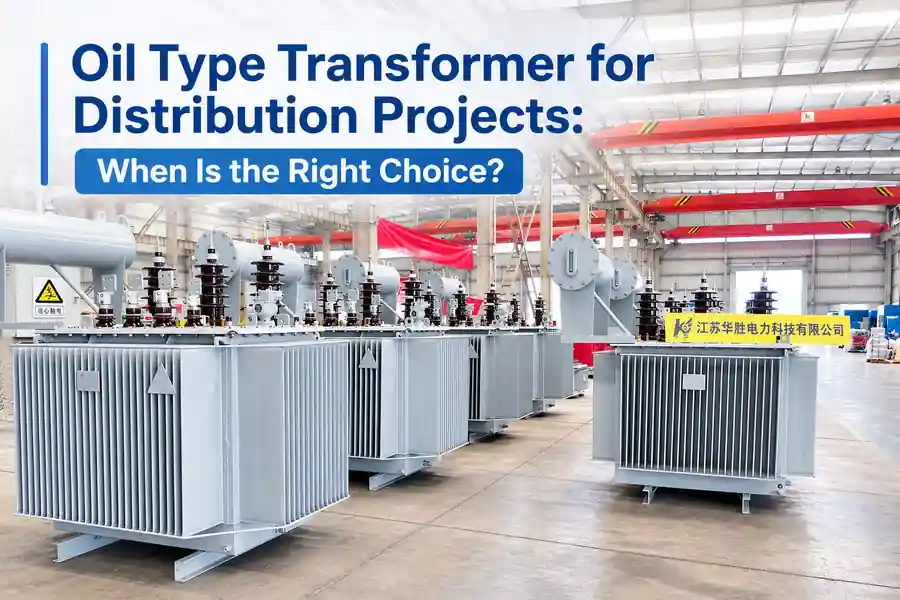
An oil type transformer is often the right choice when a distribution project needs outdoor installation, effective liquid cooling, a project-specific voltage ratio, and steady service under continuous load. It can serve factories, utility networks, commercial sites, and renewable energy projects. Yet it is not the best fit for every site.
The right choice starts with phase, load, voltage, frequency, cable layout, fire rules, and the local standard. Three-phase distribution, pole-mounted, pad-mounted, and large power transformers do different jobs.
This article explains what an oil type transformer is. which project conditions suit a three-phase oil immersed transformer. how single-phase pole-mounted, pad-mounted and power transformers differ.
See The Oil Immersed Transformers Product More Details.
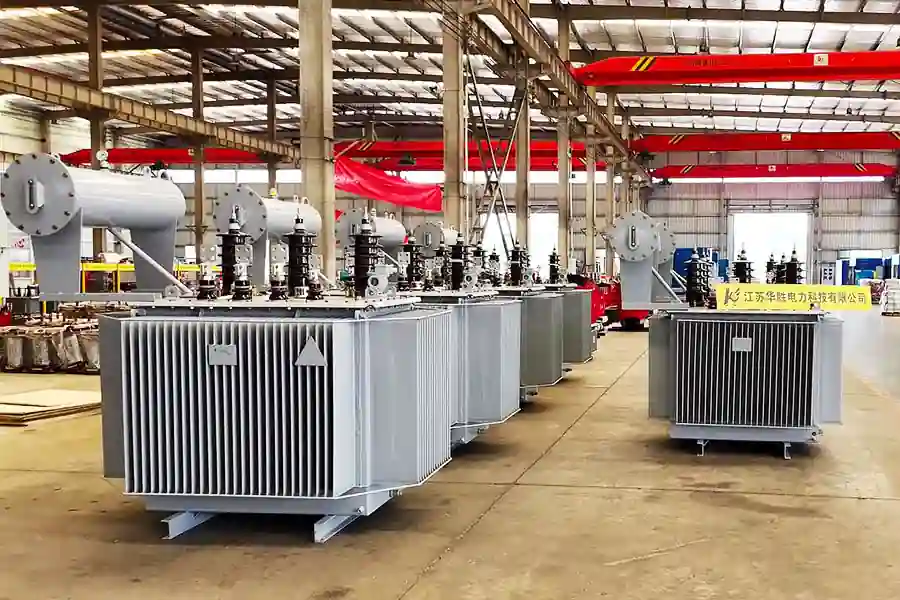
Huasheng Oil Type Transformer Was Shipped to Kuwait
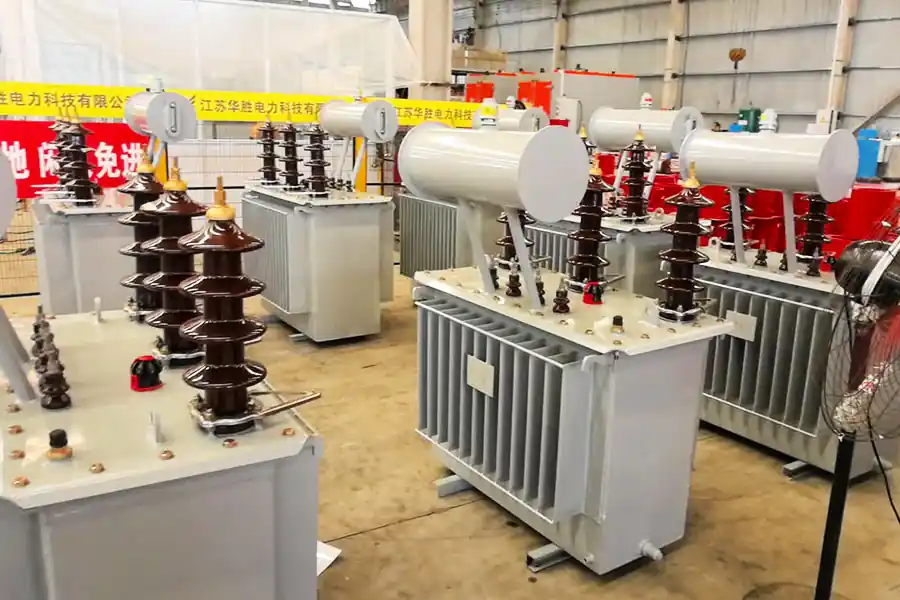
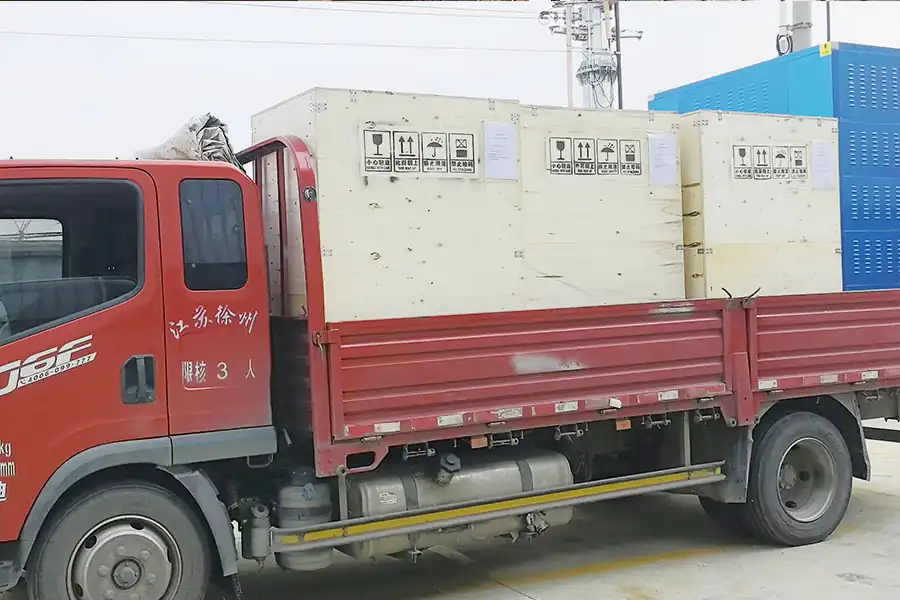
Huasheng Transformer shipped 50 kVA, 33 kV/0.4 kV, three-phase oil type transformers to a building materials factory in Kuwait. The units used mineral oil, ONAN cooling, a Dyn11 vector group, and separate wooden cases for ocean transport.
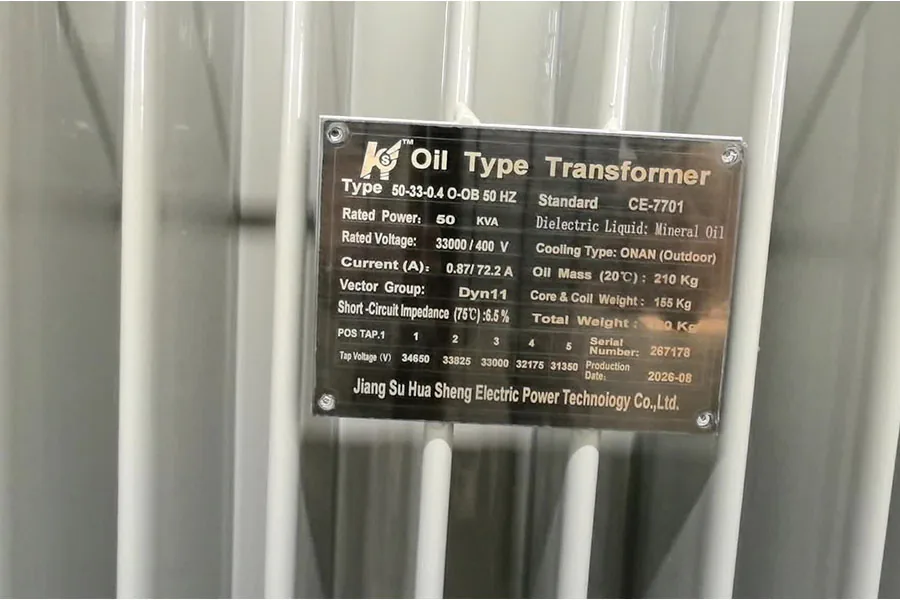
This was a real export order. Its nameplate shows why several ratings must work together.
What Electrical Configuration Was Supplied?
The documented unit was rated at 50 kVA and designed to change a 33000 V, 50 Hz supply to 400 V three-phase output. Its nameplate lists the following data.
| Specification | Supplied configuration |
|---|---|
| Equipment title | Oil Type Transformer |
| Nameplate type | 50-33-0.4 O-OB 50 HZ |
| Rated power | 50 kVA |
| Rated voltage | 33,000/400 V |
| Rated current | 0.87/72.2 A |
| Frequency | 50 Hz |
| Phase | Three phase |
| Vector group | Dyn11 |
| Dielectric liquid | Mineral oil |
| Cooling method | ONAN |
| Installation | Outdoor |
| Oil mass at 20°C | 210 kg |
| Core and coil weight | 155 kg |
| Total weight | 480 kg |
| Nameplate-listed standard/specification | CE-7701 |
| Documented serial number | 267178 |
| Production date | August 2026 |
| Manufacturer | Jiangsu Huasheng Electric Power Technology Co., Ltd. |
These values have five practical meanings.
- The 33 kV primary and 400 V secondary voltages must match the local supply and load system.
- The 0.87 A and 72.2 A values are the rated high- and low-voltage currents. This tells the designer what the windings and connections must carry.
- Dyn11 states the connections and phase displacement.
- Fourth, ONAN means oil natural circulation and air natural cooling. No pump or forced fan is required.
- CE-7701 should be shown only as the standard or specification listed on the nameplate unless the project file gives it a wider status.
How Were the Oil-Type Transformers Packed for Export?
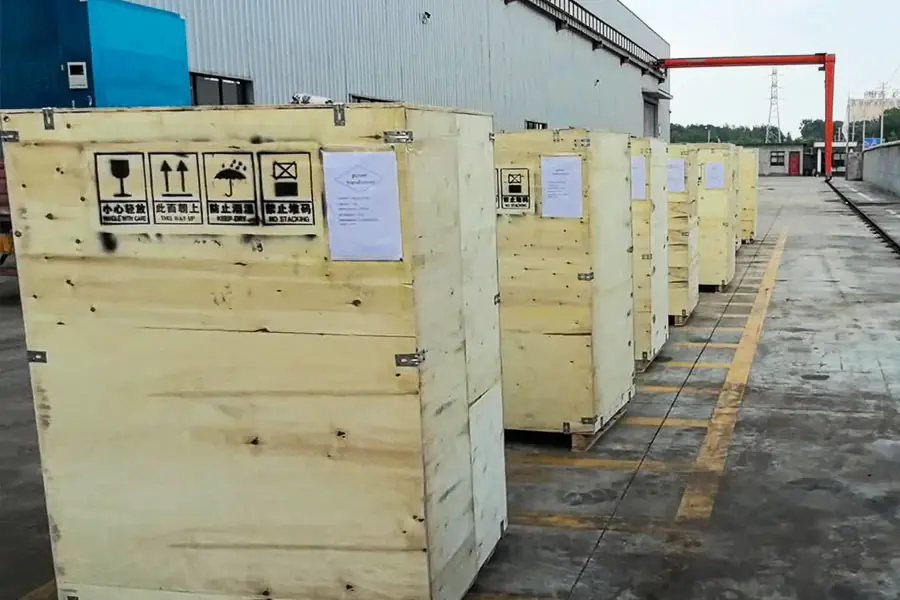
Each transformer was packed in a separate wooden case and moved to the port for ocean shipment to Kuwait. The case protects external parts during transport and port handling.
Photos can show the finished units, cases, and loading work. Do not add an unlisted moisture class, impact rating, or packing standard.
Note: For customers who order a full container load, a metal frame is usually required.
What Is an Oil Type Transformer?
An oil type transformer places its core and windings inside a tank filled with dielectric liquid. The liquid supports insulation and carries heat away. Oil-immersed transformer and oil-filled transformer are common names for the same group.
How Does Transformer Oil Support Cooling and Insulation?
Transformer oil does two main jobs: it helps control electrical stress and moves heat from the active parts to the tank and cooling surfaces. The core and windings make heat while the transformer is energized. Warm oil becomes less dense and rises. It then gives heat to the tank wall or radiator. Cooler oil moves down and returns to the active part.
Oil is not the whole insulation system. Paper, pressboard, oil gaps, barriers, clearances, and shaped parts also control electric stress. Drying, impregnation, contamination, temperature, and aging all affect insulation performance.
Higher voltage can therefore change winding geometry, clearances, bushings, barriers, and test levels.
Are Oil Type and Oil Immersed Transformers the Same?
In most distribution projects, oil type transformer and oil immersed transformer describe the same liquid-insulated equipment group.
“Oil type transformer” is a common search expression. “Oil-immersed transformer” or “oil-filled transformer” appears more often in technical product names. “Liquid-immersed transformer” is a wider term that may also include natural ester or synthetic ester units.
What Types of Oil Type Transformers Are Used in Power Projects?
Power projects use several liquid-filled transformer forms because phase, network role, cable layout, voltage, and load size vary by site. Four forms matter here: three-phase distribution, single-phase pole-mounted, pad-mounted, and large power transformers.
When Is a Three Phase Oil-Type Transformer Used?
A three-phase oil type distribution transformer supplies factories, commercial sites, utility networks, and other projects with three-phase loads. It often lowers medium voltage for motors, panels, lighting, and other loads. Some renewable projects instead use it to raise voltage.
Huasheng Product records cover 6kV, 10 kV, 11 kV, 20 kV, 33kV and 35 kV class three-phase units. The 10 kV S11, S13, S20, and S22 data covers about 30 to 2,500 kVA. Overseas buyers should check capacity, voltage, frequency, vector group, impedance, losses, and site conditions first.
When Is a Single Phase Oil-Type Transformer Used?
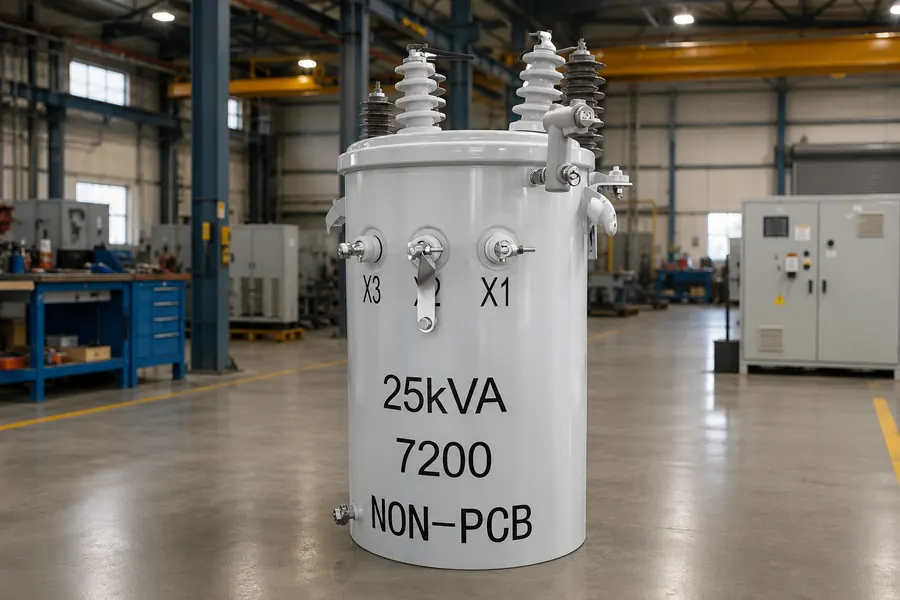
A single-phase oil-type transformer can also be called a pole-mounted transformer. A pole-mounted transformer serves smaller loads on an overhead network. Common uses include homes, farms, irrigation pumps, rural lines, and small shops.
Huasheng CON product data covers 5 to 167 kVA. Typical high-voltage values include 7.62, 7.97, 14.4, and 19.92 kV, often with 120/240 V output. Utility voltage, bushings, protection, and pole limits still control the design.
When Is a Pad-Mounted Transformer Used?
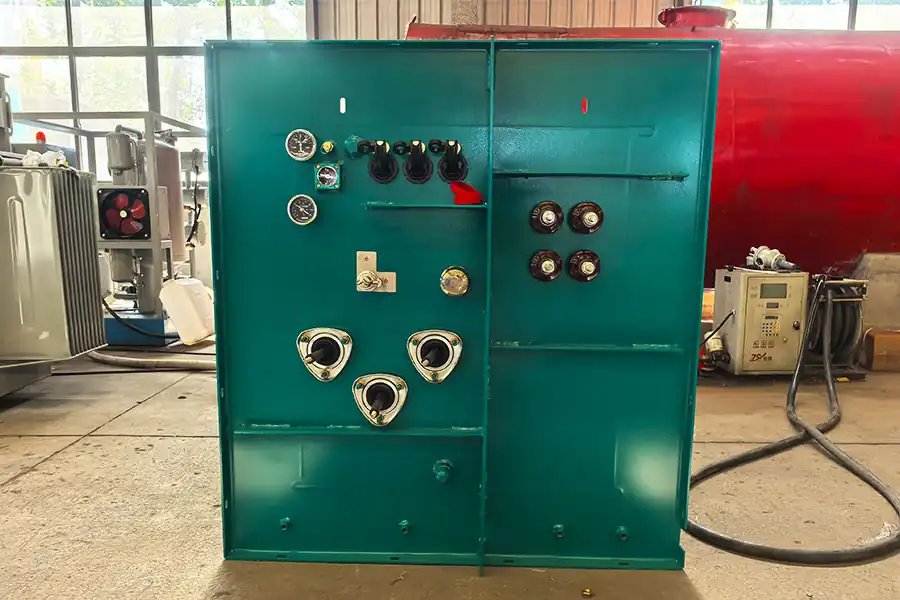
A pad-mounted transformer is used where underground cables connect to a locked unit on a ground-level concrete pad. It can be single-phase or three-phase. It usually belongs to the oil-immersed distribution category. It has high-voltage and low-voltage cable compartments and a tamper-resistant enclosure.
The high-voltage side may use radial or loop feed. Fuses, switches, and connectors depend on the utility design. A pad-mounted transformer is not the same as a compact substation.
For full capacity calculation and installation details, see the padmount transformer buying guide.
Read Related Article: Padmount Transformer Buying Guide
When Does a Project Need a Large Power Transformer?
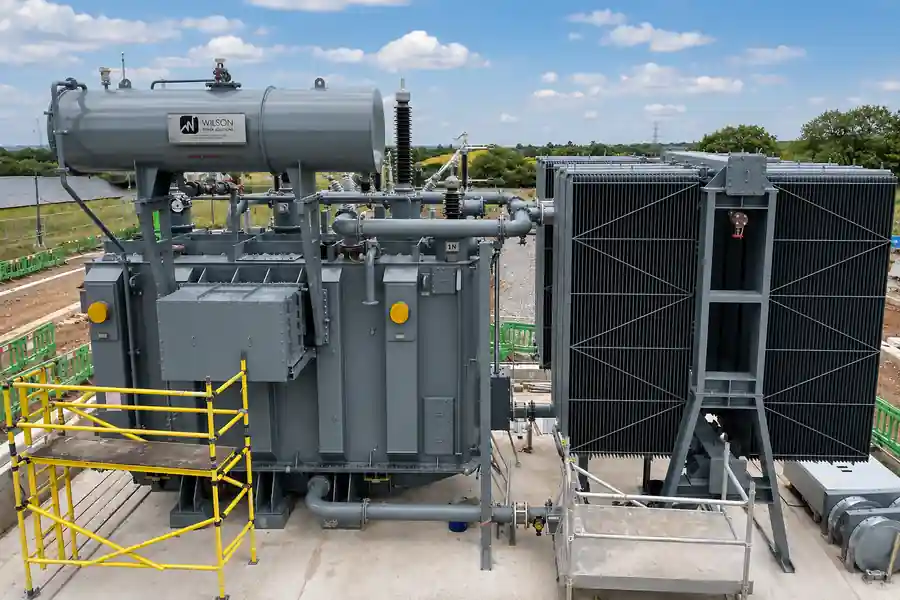
A large power transformer is used when a substation must transfer bulk power between major voltage levels. It is not just a larger distribution transformer.
Huasheng product range data includes 110 kV units from 6.3 MVA to 80 MVA and 220 kV units from 90 MVA to 400 MVA. Cooling may involve ONAN, ONAF, or other methods confirmed by the specific large design.
Click Here, Learn More Custom Power Transformers Details
When Is a Three-Phase Oil Type Transformer the Right Choice?
It is usually the right choice when a project has three-phase loads, suitable outdoor space, a known voltage ratio, and room for safe access, grounding, and oil control. It often fits industrial plants and utility distribution well. Yet the site rules must support liquid-filled equipment.
What Advantages Matter in a Distribution Project?
The main advantages are effective heat transfer, wide electrical options, outdoor use, and a long record in utility and industrial systems. Liquid can reach spaces around the active parts and move heat to the tank or radiator.
The buyer can specify voltage, capacity, vector group, impedance, taps, conductor, core, cooling, and accessories. Established inspection methods cover oil, insulation, bushings, connections, and temperature.
The design suits continuous-load projects. It fits outdoor distribution sites. Inspection and diagnostic methods are mature. Mineral oil or ester fluids give different insulation choices. Do not assume “best efficiency,” “zero maintenance,” or “explosion-proof” claims.
When May an Oil Type Transformer Be the Wrong Choice?
It may be the wrong choice when indoor fire rules, floor space, oil containment, or environmental controls make liquid-filled equipment hard to install. Mineral oil is combustible. The site may need separation, drainage, a bund, fire barriers, or other controls set by local rules.
A dry or cast resin unit may suit some indoor rooms. A pad-mounted unit may suit underground public networks, while a pole unit may suit a small overhead load.
The equipment needs inspection and operating space. Special environments may require a different liquid or a different transformer type. Oil-type units can be installed indoors if the site meets equipment, space, fire, and code requirements. The statement “oil-filled cannot be used indoors” is false.
What Is the Fastest Selection Rule?
Start with an oil-filled design for outdoor, higher-load distribution. Then compare dry type or cast resin when indoor fire and liquid controls drive the choice. The load, network, site, and governing standard can still change the answer.
Read Related Article: Three Phase Transformer Guide
How Do Oil Type Transformer Configurations Differ?
The main differences are phase, system position, cable layout, enclosure, protection, voltage class, and load size.
| Configuration | Main network role | Installation | Typical load |
| Single-phase pole-mounted | Local overhead distribution | Utility pole | Smaller single-phase loads |
| Three-phase distribution | Industrial or utility distribution | Outdoor pad or substation area | Three-phase site loads |
| Pad-mounted | Underground distribution | Locked ground-level enclosure | Residential, commercial, or industrial loads |
| Power transformer | Bulk power transfer | Major substation | Grid or large industrial systems |
Single-Phase Pole-Mounted Vs Three-Phase Distribution Transformer?
A single-phase pole-mounted unit serves smaller overhead loads, while a three-phase distribution unit supplies larger three-phase systems. The difference changes the core and winding layout, bushings, protection, output, and installation.
| Comparison point | Single-phase pole-mounted transformer | Three-phase distribution transformer |
|---|---|---|
| Phase | Single-phase | Three-phase |
| Typical role | Serves smaller overhead loads | Supplies larger three-phase electrical systems |
| Installation | Utility pole | Ground pad or substation area |
| Typical low-voltage output | 120/240 V | 400 V or another three-phase voltage |
| Typical loads | Farms, homes, or small commercial loads | Production lines, motors, and power panels |
| Weight, structure, and grid protection | Smaller pole-mounted design; matches overhead network protection | Heavier pad or substation design; matches three-phase system protection |
Do not pick by kVA alone. A 100 kVA overhead load and a 100 kVA three-phase factory load are different systems.
Three Phase Distribution Transformer Vs. Pad-Mounted Transformer?
A three-phase distribution transformer describes an electrical job. while pad-mounted also describes the enclosure, cable access, and ground-level installation. A pad-mounted unit can itself be a three-phase oil-filled distribution transformer.
| Item | three-phase Oil distribution transformer | Pad-mounted transformer |
|---|---|---|
| What it describes | Electrical role | Enclosure, cable access, and ground-level installation |
| Terminal connections | Exposed or standard terminal connections | Enclosed cable compartments |
| Network connection | Overhead lines or station busbars | Underground cables |
| Protection components | May not include integrated fuses or load-break switches | Often includes fuses or load-break switches inside the enclosure |
| Public-access sites | Not specifically designed for public access | Requires tamper-resistant doors and a concrete pad |
| Product classification | May be an oil-immersed distribution transformer | Some pad-mounted units are also three-phase oil-immersed distribution transformers |
| Installation preparation | Follow approved drawing for foundation and clearances | Requires correct concrete pad, cable openings, grounding, drainage, and operating clearance; match the approved drawing before the pad is poured |
Distribution Transformer Vs. Power Transformer?
A distribution transformer delivers power near end users, while a power transformer moves large blocks of power between grid voltage levels. Their ratings may overlap, so size alone is a poor test.
| Comparison point | Distribution transformer | Power transformer |
|---|---|---|
| System role | Supplies downstream users | Transfers bulk power between major grid voltage levels |
| Rating unit | kVA | MVA |
| Voltage level | Lower | Higher |
| Tap changer | Often off-circuit tap changer | May use on-load tap changer |
| Cooling | Often ONAN | Large units may use ONAF or more complex cooling |
| Bushings, online monitoring, and protection accessories | May not need the same level of monitoring and protection accessories | Needs bushings, online monitoring, and protection accessories |
| Transport and site installation | Different from power transformer | Different from distribution transformer |
Transport and site installation are also different. Do not say “power transformer is just bigger.” The system roles are different.
Oil Type Transformer Vs. Dry-Type Cast Resin Transformers?
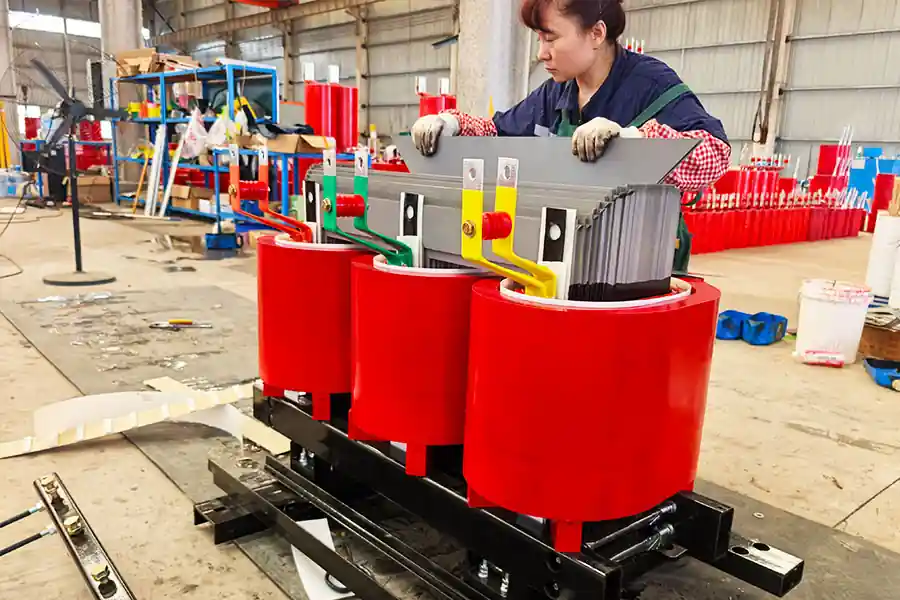
Oil type transformers often suit outdoor and higher-load projects. Dry-type cast resin transformers are often selected for protected indoor sites with tighter control of combustible liquids.
What Is the Difference Between Dry and Oil Type Transformers?
An oil type transformer uses dielectric liquid for insulation and heat transfer, while a dry-type transformer uses solid insulation and air-based cooling. This changes the fire plan, ventilation, maintenance focus, enclosure, and installation space.
An oil unit needs checks for oil level, seals, bushings, temperature, and cooling. A dry unit needs clean airflow, dust control, and a suitable enclosure. The word dry does not make a unit weatherproof.
Oil units cover broad outdoor duties. Dry units are common in buildings and protected electrical rooms. Local fire rules can outweigh purchase price.
How Does Cast Resin Compare with an Oil Type Transformer?
A cast resin transformer seals its windings in solid resin, while an oil type transformer places its active parts in a liquid insulation system. Cast resin is one type of dry transformer. It is not a phase category.
The resin protects the winding, but the design still needs airflow and heat control. An oil unit transfers heat through liquid and needs sealing and site controls. Compare capacity, loss, noise, temperature rise, and enclosure data from actual designs.
Which Option Fits Indoor, Outdoor, and Higher-Load Projects?
Cast resin often fits protected indoor distribution. while oil-filled equipment often fits outdoor utility and industrial loads when the site can manage the liquid safely. Use the table as a first screen.
| Site condition | Oil type | Dry type / cast resin |
|---|---|---|
| Outdoor exposed area | Often suitable | Requires weatherproof enclosure |
| Indoor protected room | Possible with fire and containment planning | Often preferred |
| Higher-load distribution | Often suitable | Possible but may need larger size |
| Fire-restricted area | Needs special liquid or design | Often preferred |
| Project fit | Broad utility and industrial use | Fire-sensitive indoor distribution |
Which Oil-Type Transformer Design Fits the Project?
The design should match the tank system, conductor, core, load profile, loss target, site, and maintenance plan. These choices affect cost and size, but they also affect how the unit works in service.
Should the Transformer Use a Sealed Tank or a Conservator?
A sealed tank limits direct contact between oil and outside air, while a conservator gives the oil space for volume change. Oil expands as it warms and contracts as it cools. A conservator unit may use a breather to dry incoming air. A Buchholz relay can respond to gas build-up, oil loss, or rapid oil flow on suitable designs. A pressure-relief device instead responds to rapid pressure rise.
Not every oil transformer has a conservator, breather, or Buchholz relay. The design and project standard decide what is used.
Should the Windings Be Copper or Aluminum?
Both copper and aluminum windings can meet the required rating when the conductor size, losses, temperature rise, strength, and cooling are designed for the material. Copper has higher conductivity and often costs more. Aluminum is lighter and often needs a larger conductor area for the same duty.
The material affects coil size, weight, joints, short-circuit design, and price. It does not set quality by itself. Either material must meet its stated loss and temperature limits.
Compare guaranteed losses, temperature rise, dimensions, weight, and test records. State the required material when the project does not allow a choice.
Should the Core Use CRGO Steel or Amorphous Alloy?
CRGO steel is widely used, while an amorphous core is considered when lower no-load loss has more value over the operating profile. Grain-oriented steel laminations and step-lap joints help control magnetic loss and noise. They are common in many three-phase distribution units.
An amorphous core can lower no-load loss. This may help a unit that stays energized but often carries light load. The trade-off may include different size, production, and price.
Do not select a core from a claimed percentage alone. Compare the guaranteed no-load loss, load loss, energy use, duty cycle, and price for the exact rating.
What Types of Oil Are Used in Transformers?
Mineral oil is common, while natural and synthetic ester liquids may suit projects with different fire, environmental, and material needs. The liquid must be approved as part of the transformer design. It is not a simple field substitute.
What Type of Oil Is Commonly Used in a Transformer?
Mineral insulating oil is widely used because its insulation, cooling, testing, and maintenance methods are well known. The Kuwait units use mineral oil, with 210 kg listed at 20°C.
Oil selection also depends on dielectric properties, temperature, seals, cellulose insulation, and the project standard. The exact grade must come from the approved file, not a broad country rule.
ASTM D3487 covers mineral insulating oil used in electrical apparatus and is one reference that may appear in project oil specifications. Mineral insulating oil may be specified with reference to IEC 60296 when that standard applies to the project.
When Should an Ester Fluid Be Considered?
An ester fluid may be considered when a higher fire point or better biodegradability has clear value at the site. Natural ester and synthetic ester are not the same product. Their cold-temperature behavior, moisture response, ageing, and material needs can differ.
The maker must check compatibility with paper, enamel, conductors, seals, gaskets, and coatings. The site also needs suitable sampling, filling, recovery, and spill control.
Are Oil Type Transformers Safe and Reliable?
They can run safely and reliably when the transformer is designed, protected, grounded, installed, inspected, and operated within its ratings. Safety comes from the whole system, not from one accessory.
Which Parts and Devices Support Safe Operation?
Safe operation depends on the tank, bushings, grounding, cooling surfaces, protection, pressure relief, temperature indication, and oil monitoring.
- The tank holds the active part and liquid.
- Bushings carry conductors through the grounded tank wall.
- Grounding controls exposed metal potential.
- Cooling surfaces release heat to the air.
- Pressure relief responds to rapid pressure rise.
- Indicators, fuses, relays, and tap gear support control and protection.
A de-energized tap changer is operated only after safe isolation. An on-load tap changer changes taps while carrying load within its rating. They are not interchangeable.
CIGRE’s transformer reliability survey shows why operating conditions, component design, maintenance, and failure records should be assessed together.
What Are Common Problems with Oil Type Transformers?
Common problems include oil leaks, moisture, bushing faults, overheating, loose connections, tap faults, poor insulation, and protection trips. Use records and tests because one symptom can have several causes.
| Problem | Possible cause | Inspection direction |
|---|---|---|
| Oil leakage | Seal, gasket or welded-joint issue | Oil level and tank joints |
| Overheating | Load or cooling problem | Load, oil temperature and cooling surfaces |
| Bushing fault | Contamination or insulation damage | Surface condition and test records |
| Abnormal insulation result | Moisture or contamination | Temperature-corrected trend and related tests |
| Protection trip | Internal or external fault | Protection record and qualified diagnosis |
A high insulation resistance reading alone does not prove that insulation has no aging, partial discharge, or local defect. Check temperature, historical trends, oil tests, dissipation factor, dissolved gas analysis, or other applicable diagnostics.
Where oil storage thresholds and site conditions apply, EPA spill-prevention rules may affect containment planning.
How Can Fire, Leakage, and Environmental Risks Be Controlled?
Risk is reduced through the right liquid, sound tank sealing, pressure relief, grounding, protection settings, clearances, oil containment, and routine inspection. The site design may need drainage, a bund, fire separation, barriers, or a fire system. Local rules set the details.
Leak control starts with checked welds, seals, valves, and joints. The tank coating may also need to resist humidity, salt, dust, or industrial pollution.
Corrosive environments may need project-specified coating. Specific inspection intervals and temperature limits must come from the approved project documents.
Which Specifications Determine Whether the Transformer Fits the Project?
Capacity alone cannot confirm a fit. Voltage, frequency, phase, vector group, impedance, taps, losses, insulation, cooling, dimensions, standard, and site conditions must also match.
How Should Capacity, Voltage, and Frequency Be Matched?
Rated kVA must cover the calculated load, while voltage, phase, and frequency must match the power system. Convert kW with the real power factor. Motor starting, harmonics, duty, growth, and derating can also change the needed kVA.
Do not apply a fixed 0.8 factor to every project. Use the actual load data.
Frequency affects magnetic flux, loss, current, and heat. Do not swap 50 Hz and 60 Hz without an engineering review. The Kuwait case is a 50 Hz design.
Why Do Vector Group, Impedance, and Tap Range Matter?
These values affect phase relation, fault current, voltage regulation, parallel operation, and system compatibility. In Dyn11, D is a delta high-voltage winding, yn is a star low-voltage winding with neutral, and 11 shows phase displacement.
Impedance affects fault current and voltage drop. A lower value can raise available fault current, while a higher value can increase voltage drop. The system study should set it.
Taps adjust the turns ratio when supply voltage differs from nominal. Ranges such as ±5% or ±2 × 2.5% appear in some distribution designs, but the project controls the final range.
Why Do Losses, Temperature Rise, and Cooling Ratings Matter?
Losses and temperature rise affect operating cost, heat, efficiency, and load capacity. No-load loss continues while the unit is energized. Load loss rises with current and changes with temperature.
Compare guaranteed values for the exact rating. A Chinese series label does not prove a fixed efficiency gain. Contract data and test reports must control the purchase.
ONAN, ONAF, OFAF, ODAF, and ODWF describe different cooling flows. Use only a rating shown on the approved design and nameplate.
Temperature Rise, and Cooling Ratings Matter?Temperature-rise limits and test methods for liquid-immersed transformers are addressed in IEC 60076-2.
What Are the Dimensions of a 1000 kVA Oil Type Transformer?
There is no universal size for a 1000 kVA oil type transformer. Units with the same kVA can differ in voltage, frequency, windings, losses, insulation, radiators, bushings, taps, and accessories.
These choices change dimensions, oil mass, and total weight. Transport limits can also change the tank or radiator. Use a project outline drawing with the base, terminals, clearances, and weights. Do not pour a foundation from a generic online size.
Which Standards and Site Conditions Must Be Confirmed?
The design must follow the project standard and stated service conditions. The contract must name the exact IEC, IEEE/ANSI, or other standard and edition.
Site data may include:
- Ambient temperature and altitude
- Indoor or outdoor location
- Solar heat and airflow
- Humidity, salt, dust, or chemical pollution
- Seismic, fire, oil-containment, and noise limits
- Cable, bushing, and enclosure needs
Kuwait projects may need review of high ambient temperature and solar exposure. This case does not state a design temperature, so it cannot prove a fixed high-temperature rating.
Where ANSI/NETA ATS is specified, field acceptance testing should follow the approved project scope and equipment rating.
What Are the Key Points for Choosing an Oil Type Transformer?
Choose the system role first, then check phase, capacity, voltage, frequency, installation, cooling, liquid, losses, protection, standard, and environment. The main points are simple:
- Three-phase distribution units serve industrial and utility three-phase loads.
- Pole-mounted units fit smaller loads on overhead networks.
- Pad-mounted units fit protected ground-level underground distribution.
- Power transformers transfer bulk power at major substations.
- Oil-filled designs often fit outdoor and higher-load distribution.
- Dry type or cast resin may fit some restricted indoor sites better.
- Capacity alone cannot prove system compatibility.
- Final ratings and dimensions must come from the approved project design.
A nameplate answers one question, not the full job. Match the unit to the network and site before price.
Read Related Article:
Huasheng Transformer full name is Jiangsu Huasheng Electric Power Technology Company. Huasheng has many years of experience in manufacturing distribution transformers. Contact Huasheng Experts, Get Your Project Solutions.